Wildfire Defense
Wildfire Defense Systems in California: Frequently Asked Questions

Golden Bear Nick
California homeowners are facing an increasing need to prepare their properties for wildfire. While no system can guarantee that a home will survive a wildfire, combining home hardening, defensible space, and active wildfire defense systems can help reduce a property's exposure to flames, radiant heat, and wind-driven embers.
CAL FIRE identifies embers, direct flame contact, and radiant heat as three major ways structures can ignite. In fact, the California Office of the State Fire Marshal notes that 60–90% of home ignitions are caused by embers, making ember protection an important part of a comprehensive wildfire strategy.
Wildfire defense systems are designed to add another layer of protection around your home by helping detect, suppress, or slow the spread of fire before it reaches vulnerable areas of the property.
What is a wildfire defense system?
A wildfire defense system is a combination of technologies and property improvements designed to reduce the risk of wildfire damage to a home.
Depending on the property, a wildfire defense system may include:
- Exterior wildfire sprinkler systems
- Ember protection
- Fire-resistant landscaping and defensible space
- Water storage tanks
- Dedicated fire pumps
- Fire-resistant vents
- Roof and gutter protection
- Home-hardening upgrades
- Fire-resistant building materials
- Monitoring and automated fire-response technology
The goal is not to rely on a single product. Instead, multiple layers of protection can work together to create a more resilient property.
Why are wildfire defense systems important in California?
Wildfire conditions can change rapidly. Wind, dry vegetation, terrain, and nearby fuels can all influence how quickly a fire spreads.
CAL FIRE recommends two fundamental strategies for homeowners: home hardening and defensible space. Home hardening focuses on making the structure more resistant to ignition, while defensible space creates a buffer between the home and surrounding vegetation.
A wildfire defense system can complement these measures by adding an active layer of protection around the property.
How do exterior wildfire sprinklers work?
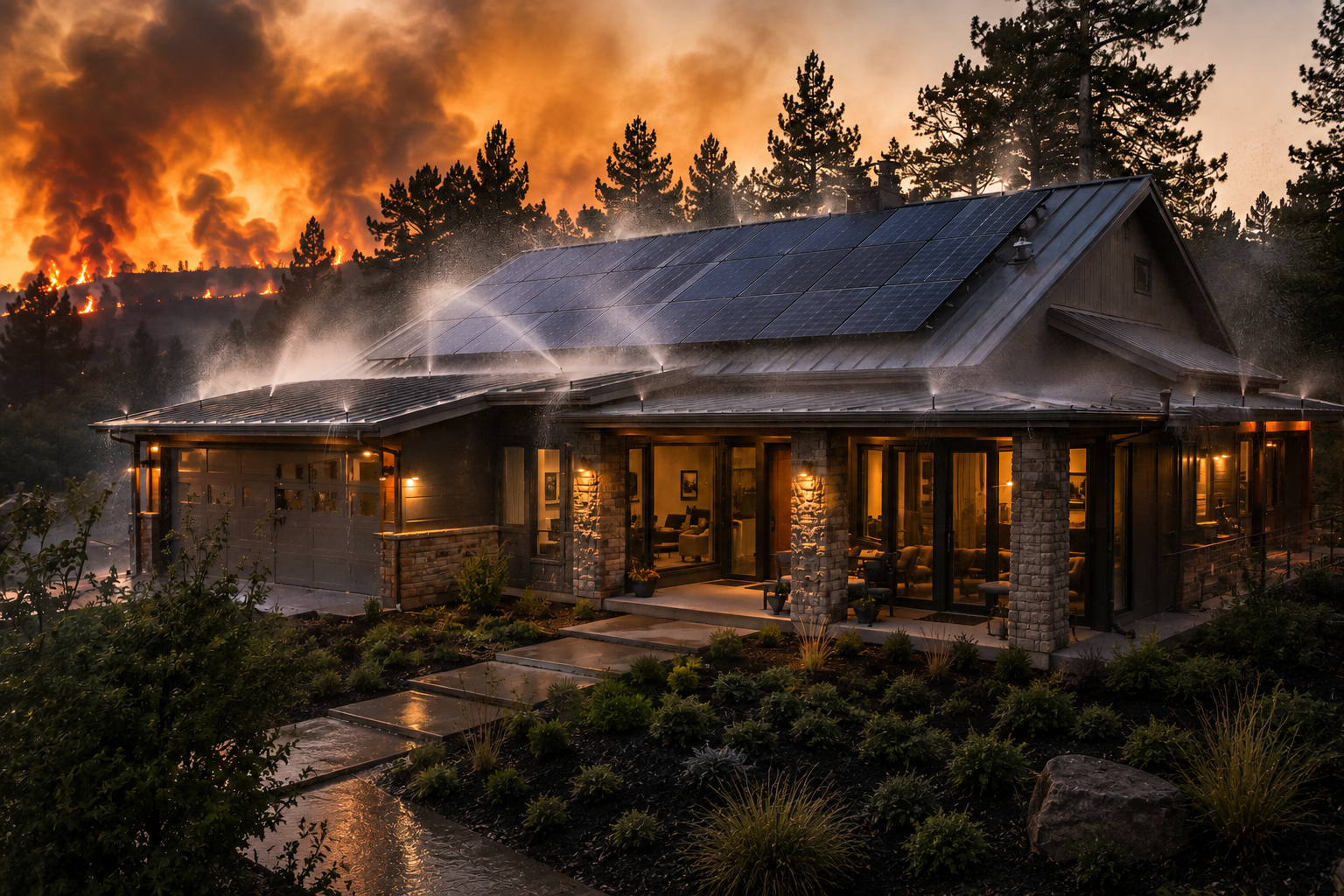
Exterior wildfire sprinkler systems are designed to distribute water around vulnerable areas of a property when activated.
Depending on the system, sprinklers can help wet areas such as:
- Roofs
- Eaves
- Decks
- Exterior walls
- Vegetation surrounding the home
- Other vulnerable areas of the property
The purpose is to help reduce the likelihood that nearby fire exposure will ignite combustible materials and to help slow fire progression around the structure.
An exterior sprinkler system should be viewed as one component of a comprehensive wildfire mitigation strategy, rather than a replacement for defensible space or home hardening.
What happens if the power goes out during a wildfire?
Power outages are an important consideration when designing a wildfire defense system.
A resilient system can be designed around backup power and water-storage equipment so that critical wildfire-defense equipment can continue operating during a grid outage.
For homeowners looking at a comprehensive resilience strategy, this can include:
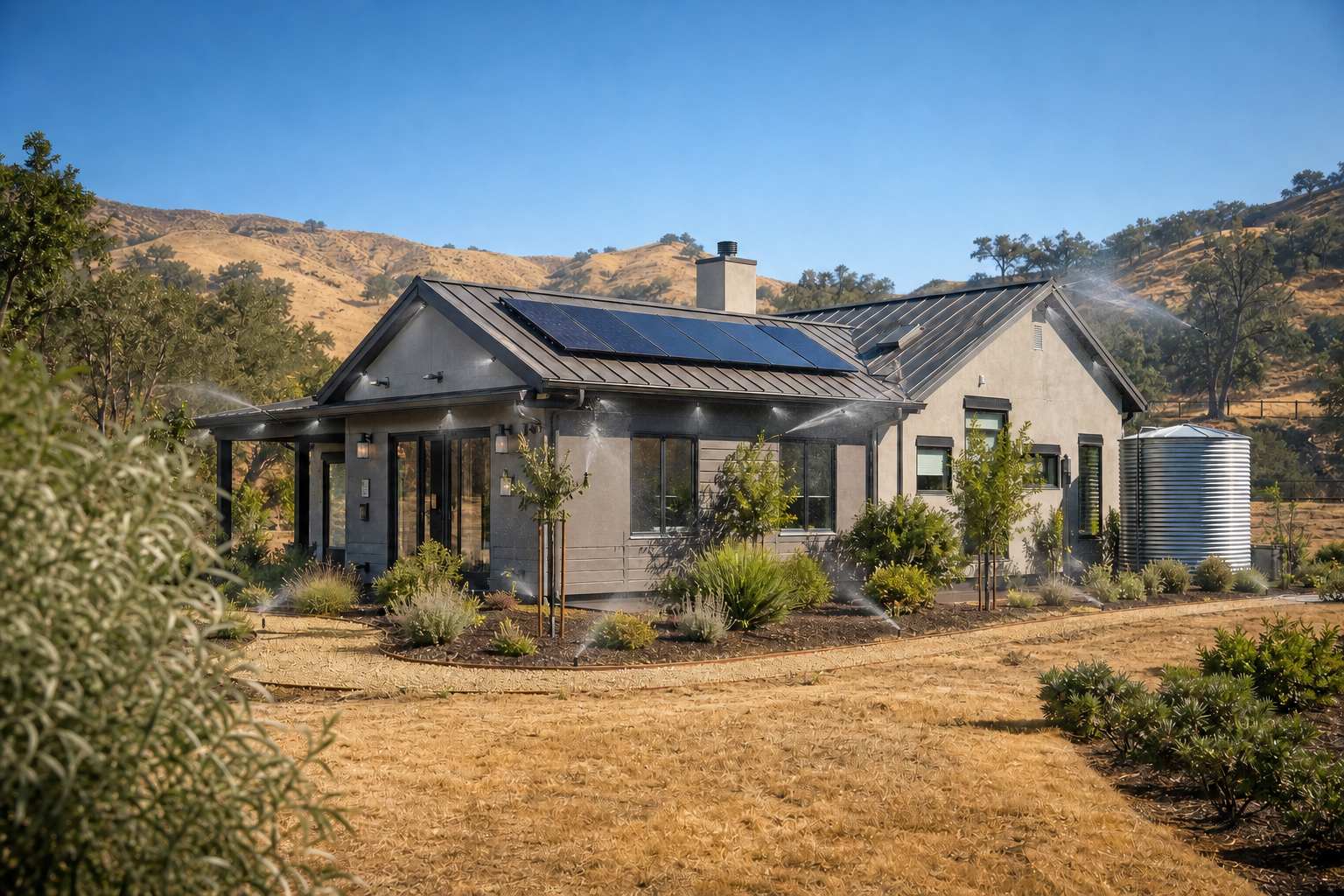
Solar + Battery Storage + Water Storage + Fire Pump + Wildfire Sprinklers
This approach can help reduce dependence on the electrical grid during an emergency.
Why is water storage important for wildfire protection?
During a wildfire, access to water can become an important consideration. Municipal water pressure may be affected by emergency conditions, infrastructure damage, or high demand.
A dedicated water storage tank can provide an additional water source for a property's wildfire defense system.
When paired with an appropriately sized fire pump and sprinkler system, stored water can provide a dedicated resource for wildfire protection.
The appropriate tank size, pump capacity, sprinkler coverage, and system design depend on the property and should be evaluated by qualified professionals.
What is home hardening?
Home hardening involves improving the home's ability to resist ignition from wildfire exposure.
According to CAL FIRE, important areas to evaluate include:
- Roofs
- Gutters
- Vents
- Eaves
- Windows
- Exterior doors
- Siding
- Decks and porches
- Fences
- Other combustible attachments
For example, ember-resistant vents can help reduce the ability of wind-driven embers to enter the attic or crawlspace. CAL FIRE also recommends maintaining roofs and gutters free of combustible debris and addressing vulnerable openings around the home.
What is defensible space?
Defensible space is the area surrounding a structure that is maintained to reduce wildfire exposure.
California's defensible-space framework includes different zones around structures. The first five feet surrounding a structure is increasingly emphasized as an ember-resistant zone, while additional zones farther from the home focus on reducing vegetation and combustible materials that can contribute to fire spread.
Defensible space can include:
- Removing dead vegetation
- Clearing leaves and pine needles
- Maintaining vegetation spacing
- Pruning trees
- Removing combustible materials near the home
- Keeping areas underneath decks clear
- Maintaining appropriate clearance around structures
A wildfire defense system works best when combined with properly maintained defensible space.
Can wildfire defense systems protect against embers?
They can be designed to address some of the vulnerabilities created by embers.
Embers can travel ahead of the main fire front and collect around roofs, gutters, vents, decks, fences, and other areas of a home. California's Office of the State Fire Marshal specifically identifies embers as a major cause of structure ignition.
This is why a comprehensive wildfire strategy should address both the structure itself and the property surrounding it.
Potential measures include ember-resistant vents, protected roof and gutter areas, defensible space, fire-resistant landscaping, and active exterior fire protection.
Do wildfire defense systems replace home insurance?
No.
Wildfire defense systems are intended to reduce risk and improve property resilience. They do not replace homeowners insurance, and homeowners should not assume that installing a wildfire defense system guarantees insurance coverage, lower premiums, or protection from loss.
Insurance requirements and mitigation programs can vary by insurer and location.
Homeowners should speak directly with their insurance provider about how specific wildfire mitigation improvements may be considered.
Can wildfire mitigation improvements help with insurance?
Potentially, depending on the insurance company, property, and mitigation measures.
California's Department of Insurance provides wildfire preparedness resources for homeowners, while insurers may have their own mitigation requirements or programs.
Homeowners should ask their insurance carrier whether specific improvements—such as defensible space, home hardening, or other wildfire mitigation measures—could affect their policy.
What are the benefits of a wildfire defense system?
A professionally designed wildfire defense system can provide several potential benefits:
1. An additional layer of protection
Instead of relying exclusively on firefighters, defensible space, or construction materials, homeowners can incorporate active fire-defense equipment into their overall strategy.
2. Protection during critical moments
Wildfire conditions can change quickly. Automated or remotely monitored systems may provide an additional response capability when a homeowner is away from the property.
3. Increased property resilience
Home hardening and defensible space can reduce vulnerabilities throughout the property. CAL FIRE states that these measures can increase the likelihood of a home surviving wildfire exposure, although they are not a guarantee.
4. Backup water availability
Dedicated water storage can provide an additional resource for wildfire-defense equipment.
5. Integration with energy resilience
Solar and battery storage can be incorporated into a broader home-resilience strategy, helping provide backup electricity for critical equipment during grid outages.
6. Long-term preparedness
Wildfire preparation isn't something that should only happen when a fire is approaching. Maintaining defensible space, inspecting equipment, and keeping systems operational can make wildfire preparedness an ongoing part of property maintenance.
How do solar and wildfire defense systems work together?
Solar and battery systems can provide energy resilience, while wildfire defense systems address physical fire exposure.
A comprehensive resilient-home strategy might include:
Solar Panels
↓
Generate electricity
Battery Storage
↓
Provides backup power during outages
Water Storage
↓
Provides a dedicated water supply
Fire Pump
↓
Provides pressure for the defense system
Exterior Wildfire Sprinklers
↓
Help protect vulnerable areas around the home
Home Hardening + Defensible Space
↓
Reduce opportunities for embers and flames to ignite the structure
Together, these components can create a layered resilience strategy rather than depending on a single form of protection.
Is every California home a candidate for a wildfire defense system?
Not necessarily.
The right solution depends on factors such as:
- Property size
- Home location
- Terrain
- Vegetation
- Roof type
- Existing water supply
- Available water storage
- Electrical service
- Fire department access
- Existing home-hardening measures
- Local building and fire requirements
A property assessment can help determine which improvements make sense for a particular home.
What should homeowners do first?
Start with an assessment of the property.
A comprehensive wildfire-resilience assessment should look at both the structure and the surrounding property.
Homeowners can begin by evaluating:
- Defensible space
- Roof and gutters
- Vents and openings
- Windows and doors
- Decks and exterior structures
- Vegetation and landscaping
- Water availability
- Backup power
- Potential locations for exterior sprinkler coverage
- Local wildfire and building requirements
CAL FIRE provides a home-hardening self-assessment that homeowners can use to identify vulnerabilities and prioritize improvements.
Are wildfire defense systems a guarantee against wildfire damage?
No.
No wildfire mitigation system can guarantee that a home will survive every wildfire scenario.
The purpose of wildfire defense is to reduce vulnerabilities and add layers of protection.
CAL FIRE specifically states that home hardening and defensible space are not a guarantee that a home will survive a wildfire, but that these efforts give the home a better chance of surviving wildfire exposure.
The most effective approach is therefore comprehensive: combine defensible space, home hardening, active wildfire-defense equipment, water resources, and energy resilience.
Building a More Resilient California Home
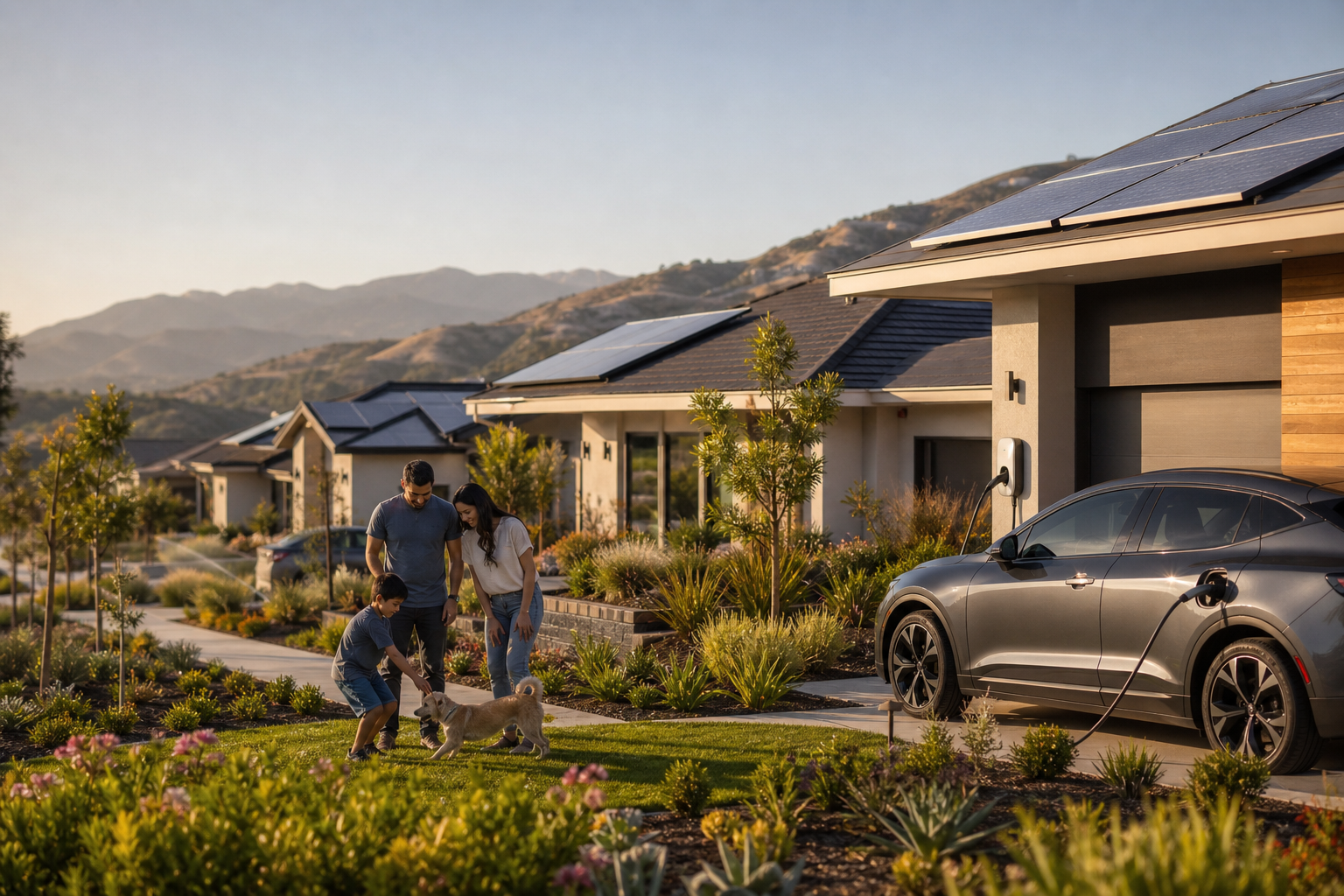
Wildfire preparedness is evolving beyond simply evacuating when a fire approaches. California homeowners are increasingly looking at ways to make their properties more resilient before an emergency occurs.
A wildfire defense system can become one component of a larger resilience plan that combines:
Energy Resilience — Solar, batteries, and backup power
Wildfire Resilience — Sprinklers, pumps, water storage, ember protection, and defensible space
Home Resilience — Hardening, maintenance, monitoring, and emergency preparedness
The goal is simple: reduce vulnerabilities, add layers of protection, and make the home better prepared for wildfire conditions.
For California homeowners in wildfire-prone areas, preparing before the next fire can be one of the most important steps toward creating a more resilient property.
This article is for general educational purposes and is not a substitute for a property-specific assessment, engineering, fire-code review, or advice from qualified professionals. Wildfire defense systems should be designed and installed in accordance with applicable California and local requirements